
Home
Meet the Team

Why Partner With Us
Home Search
Home Valuation
Communities
Testimonials
New Developments
Commercial
Video Gallery
Blog
Contact Us
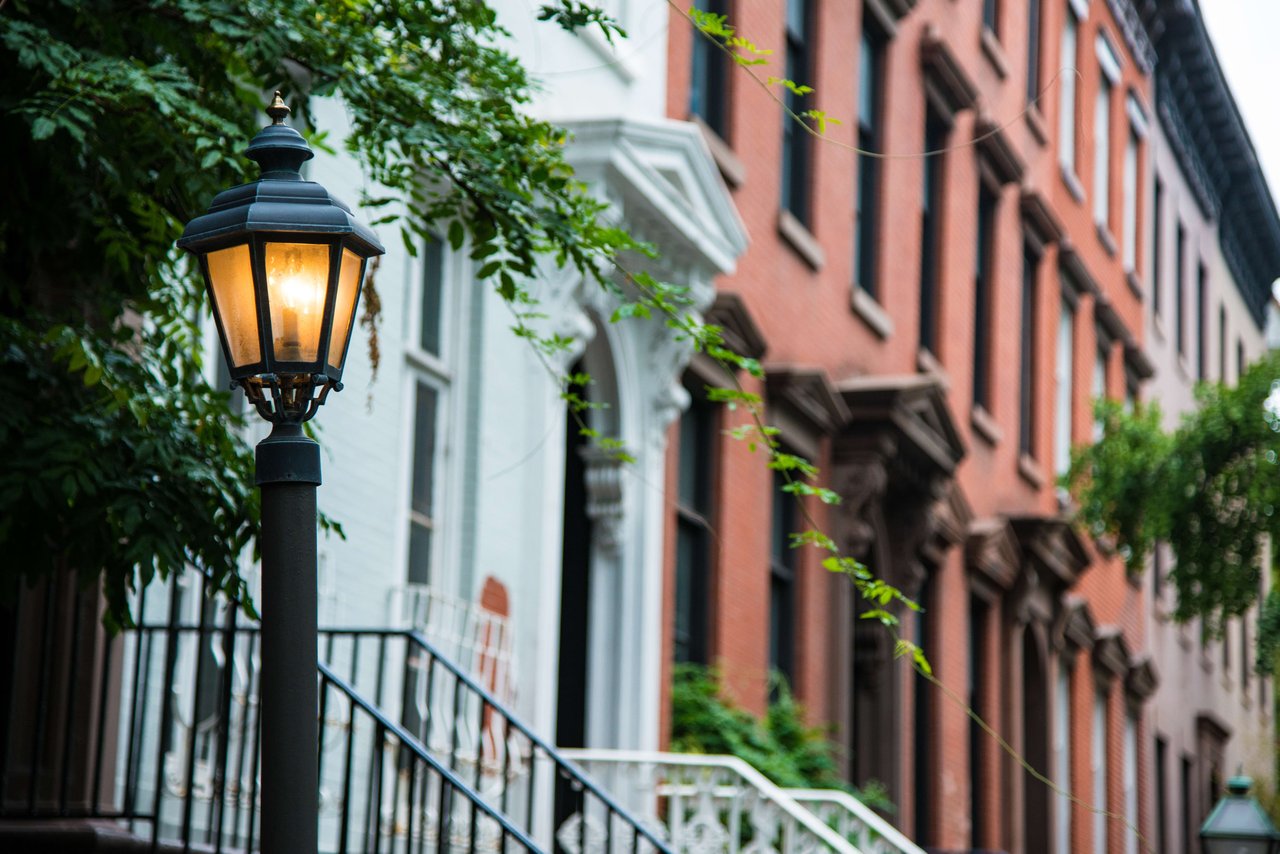
A buyer we worked with this summer stood in the kitchen of a one-bedroom on Garden Street, loved the light, loved the layout, and asked the listing agent about parking. The answer was "street parking, permit available." She wrote that down as a plus. Two blocks over, a comparable unit near Sinatra Drive came with a deeded garage spot and a price tag $60,000 higher. She almost crossed it off for that reason alone.
Both answers were true. Neither one told her what she actually needed to know, which is that in Hoboken, "permit available" and "guaranteed parking" are not the same sentence, and the gap between them just got more expensive to close.
Hoboken's own Parking Utility answers the question "why can't I find a spot even with a resident permit" directly on its FAQ page. The answer is not about population density or narrow streets. It says the permit's low cost is subsidized 90 percent by the city to keep it affordable, and that subsidy is precisely what results in more cars competing for the same limited curb space.
That is a pricing story, not a geography story. When a good is priced well below what it costs to provide, more people want it than there is supply to go around, and the rationing happens by inconvenience instead of by dollars. In Hoboken, the inconvenience is circling the block. A resident permit has never guaranteed a spot. It has only ever guaranteed you're allowed to compete for one.
Hoboken's own numbers back this up. An ordinance introduced in April 2026 stated plainly that residential parking permits are currently oversubscribed in Hoboken, with approximately 20 percent of streets having more than three permits issued per available parking space. That is not a rounding error. It is a fifth of the city's streets running at more than triple demand against supply.
The council's fix was to raise the price. As adopted, resident permit rates rose starting June 1, 2026, from $52 to $95 for a household's first vehicle, from $104 to $200 for a second, and from $208 to $300 for a third. City Hall had floated $120 for the first vehicle back in April; the number that actually took effect came in lower, which suggests some political give on the steepest jump even as the broader increase went through.
The same round of ordinances extended metered enforcement on Fridays and Saturdays from 9 p.m. to midnight along the Washington Street corridor, the PATH and Hoboken Terminal area, and 1st and 14th Streets, with residents holding valid permits in those business districts exempted from the extra hours. The logic, per the city, is that these blocks stay busy well past 9 p.m. and the old cutoff was giving away curb space for free during the hours it was most in demand.
Here's what that means for a buyer weighing whether to skip paying for dedicated parking: even after nearly doubling, a Hoboken resident permit is still a rounding error next to a garage contract or a deeded space. The city moved the price, but not by nearly enough to close the gap that created the shortage in the first place. The oversubscription problem the ordinance itself documented is not solved by this round of increases. It is nudged.
| Option | What it costs (2026) | What it guarantees |
|---|---|---|
| Resident permit (on-street) | $95 to $300/year depending on vehicle count | The right to compete for a spot, not a spot |
| Monthly garage contract | Roughly $175 to $325+/month, higher near the waterfront and the Terminal | A reserved or unreserved space, contract terms vary by operator |
| Deeded parking space | Typically $25,000 to $75,000 added to purchase price, sometimes more in top-tier waterfront buildings | Ownership of the space itself, tied to the unit's deed |
The permit column is the one buyers most often mistake for a real substitute for the other two. It isn't. It's a lottery ticket that got slightly more expensive in 2026 without getting any more likely to pay off on a street that the city's own ordinance says is running at three-plus permits per space on a fifth of its blocks.
Hoboken listings use "parking" loosely enough that the word alone tells you almost nothing. A deeded space is real property attached to your unit, conveyed at closing, and priced into your purchase and your mortgage basis. An assigned space is a benefit controlled by the homeowners association, not something you own outright, which matters if the building ever reallocates spots or if the rules around subletting a space differ from the rules around subletting the unit. Some waterfront buildings go a step further: one recent Maxwell Place listing highlighted an oversized deeded parking space located on the same floor as the home, which is worth noticing because "deeded" alone doesn't tell you whether you're walking one flight or driving down four ramps to reach your car.
The waterfront corridor running from 1st Street north through Maxwell Place, past buildings like 1450 Washington, Hudson Tea, and Constitution Court, tends to bundle deeded or assigned parking into the listing more often than not, and it prices accordingly. The brownstone blocks around Garden and Bloomfield Streets more often leave you with street parking as the only option, permit included.
None of this is happening in a soft market where a buyer can negotiate the parking gap away. Hoboken's condo segment closed 59 sales in June 2026, up 3.5 percent year over year, at a median price of $1,100,000, up 22.2 percent from June 2025. Units averaged 14 days on market and sold at 101.9 percent of list price. Inventory was up to 120 active listings, a 2.5-month supply, which gives buyers more choices than a year earlier but not much room to talk a seller down over a missing parking spot when the unit itself is still moving in two weeks at or above ask.
The Parking Utility's FAQ doesn't just explain the shortage. It also points residents toward alternatives, naming the Corner Cars carshare program and saying the city is working to make going car-free easier over time. Read alongside the 2026 fee increases and the extended meter hours, that's a consistent signal: the city is using price and enforcement, not new supply, to manage its parking problem, and it expects more residents to opt out of car ownership entirely rather than compete for a shrinking bargain.
For a buyer, that's a legitimate third path worth pricing against the other two. Hoboken's PATH access and ferry terminals put most of Manhattan under 15 minutes away without a car. If you can live without one, the entire parking premium, permit, garage, or deeded, becomes money you don't have to spend at all.
Does a Hoboken condo without deeded parking still sell well? Yes. The overall market moved fast in June 2026, with units averaging 14 days on market and selling at 101.9 percent of list price. Lack of parking doesn't stall a sale in this market, but it does shift a real ongoing cost onto the buyer instead of the seller.
How much more should I expect to pay for a deeded space versus a monthly garage contract? A deeded space typically adds $25,000 to $75,000 to the purchase price as a one-time cost folded into your mortgage. A monthly garage contract runs roughly $175 to $325 or more per month with no equity built up. The math tends to favor the deeded space for anyone planning to stay five years or longer.
Will the resident parking permit keep getting more expensive? Under the city's own code, permit fees can be amended annually as of January 1, in line with CPI or up to 3 percent, whichever is lower. The 2026 increase to $95, $200, and $300 was a larger one-time correction rather than a routine annual bump, and the ordinance that authorized it explicitly cited the oversubscription problem as the reason.
If you're comparing Hoboken listings and trying to figure out what a parking line item is actually worth to your budget and your resale plan, that's exactly the kind of math Alexander Calle and the team walk through with buyers every week. Schedule Your Strategy Call and we'll run the numbers on the specific buildings you're considering.
Are you interested in buying or selling a home? Look no further than working with our real estate experts.