
Home
Meet the Team

Why Partner With Us

Home Search
Home Valuation
Communities
Testimonials
New Developments

Commercial
Video Gallery
Blog

Contact Us
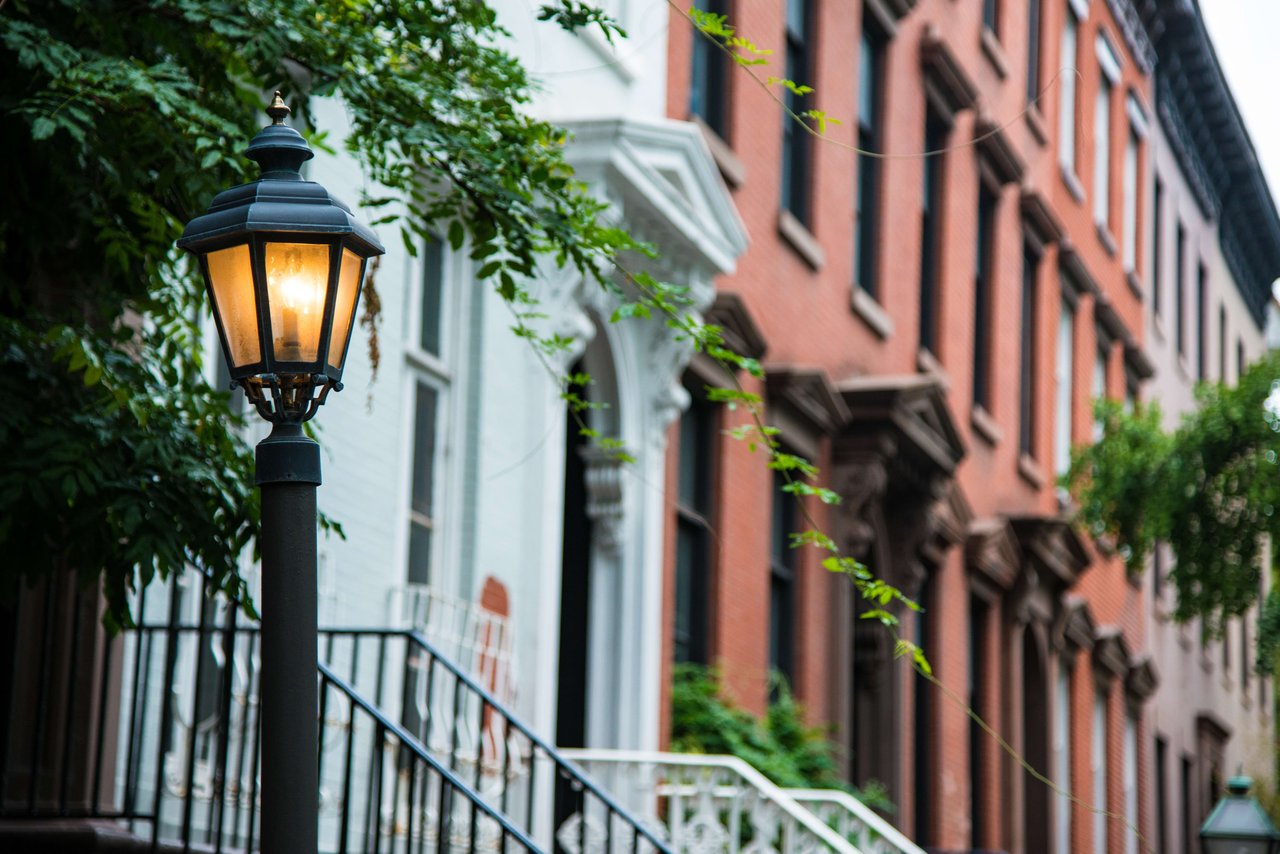
Walk the block bounded by Port Imperial Boulevard, Avenue at Port Imperial and Ferry Way this month and you'll find excavation equipment, a construction fence, and a rendering board showing a 300-seat theater with a grand lobby facing the Hudson. That's the future home of live performance in Weehawken, and it broke ground in May.
Drive fifteen minutes north to Park Avenue, park in the Lidl supermarket lot at 4100 Park Avenue, and climb the stairs of a 175-foot water tower built in 1883, and you'll find the present tense of live performance in Weehawken. Hudson Theatre Works has been staging productions inside that tower, and it isn't pausing for construction. The new building won't be ready for a while. The old one never stopped.
The groundbreaking this spring wasn't the start of an idea. It was the end of one that had been circling Weehawken's waterfront since roughly 2000, when local advocate Bruce Sherman founded the nonprofit Hudson River Performing Arts Center to push for a permanent cultural venue on the shoreline. Early proposals looked at building on a pier, or on the land that eventually became the waterfront park instead. Funding collapsed more than once: the 2008 financial crisis, Superstorm Sandy in 2012, and the pandemic each knocked the project back a few more years, according to reporting from Hudson County View and the Hudson Reporter on the May groundbreaking.
What finally got built is a public-private partnership between the township and developers Roseland Properties and Rockpoint, with Weehawken retaining naming rights and handling the interior buildout while the developers construct the shell. The plan calls for a 300-seat main theater and a second, more intimate space seating 60 to 100 people, plus a grand lobby with river views. Construction is expected to run 18 to 20 months from the May groundbreaking, which puts a realistic opening somewhere between late 2027 and early 2028.
That's not a criticism of the timeline. Complex waterfront construction on a public-private budget takes what it takes. But it means anyone picturing Weehawken's cultural life as something that starts once this building opens is working from the wrong assumption. The scene already exists. It's just running out of a landmark most passersby have never noticed.
Hudson Theatre Works has produced work out of four different spaces since it was founded, according to artistic director Frank Licato, because finding suitable venues in Hudson County has always been difficult. Its most recent home before the Water Tower was the old Woodrow Wilson School building, which is now being converted back into an actual school. The Weehawken Water Tower, designed by architect Frederick Clarke Withers and modeled on Florence's Palazzo Vecchio, has no elevator. Getting to the playing space means climbing a staircase inside a 19th-century municipal structure that most people drive past without registering as anything other than infrastructure.
"This is like our fourth space, because it's so hard to find space in Hudson County," Licato told Hudson County View at the groundbreaking. "The mayor's been extremely generous with us. We were using the old Wilson, which is going to be a school again. Then he pulled us in and said he's going to build this."
The company is a professional Equity house, meaning its actors work under union contract. It's kept ticket prices low on purpose, and it has continued its programming straight through the construction announcement. In June, the company hosted a free staged reading of a new play called "Marcy" at the tower, complete with a talkback with the playwright, part of an ongoing new-works series called PlayWorks. That's not a farewell tour. It's a working theater company doing what it does, in the tower, while a different building rises across town.
Two organizations run Weehawken's performance calendar right now, and they operate on different clocks. Hudson Theatre Works keeps producing at the Water Tower on its usual schedule. The Hudson Riverfront Performing Arts Center, the nonprofit Sherman founded, runs two free concert series that don't require waiting for anything: Summer Concerts on the Hudson, held outdoors at Lincoln Harbor Park and underwritten by UBS and Hartz Mountain Industries, and the indoor UBS Atrium Series, which runs through the fall, winter and spring. As the outdoor series winds down for the season, the indoor one picks up, which means the calendar doesn't actually go quiet once the weather turns.
If you're planning to catch a show at the Water Tower for the first time, a few practical notes worth knowing before you go:
None of that is the kind of detail that shows up on a listing sheet. It's the kind of thing you only know if you've actually been, or if you talked to someone who has.
The future performing arts center isn't a freestanding building. It's the ground floor of 300 Port Imperial Avenue, an 11-story mixed-use tower designed by Lessard Design and developed by Canoe Brook Development alongside Roseland Properties. The same structure that will eventually house a 300-seat theater is also delivering 313 market-rate apartments and 296 below-grade parking spaces, rising on a formerly vacant 1.88-acre parcel along the waterfront. Canoe Brook's Carl Goldberg has said the idea of anchoring the development with a shared civic space was part of the plan from the start, back when the Port Imperial development effort began around 2000, the same year Sherman founded his nonprofit a few blocks away without knowing it yet.
That timing lines up with something else happening nearby. The Hudson Riverfront Performing Arts Center's own office sits at 1200 Harbor Boulevard, the same address as DRIFT, the waterfront restaurant that's occupied the former Houlihan's space in Lincoln Harbor since late 2024. The nonprofit spent years advocating for a theater from an office next to what's now one of the neighborhood's better-known dinner reservations. It's a small detail, but it says something about how compressed this stretch of waterfront actually is. The people planning the borough's cultural future and the people running its restaurants aren't operating in different neighborhoods. They're in the same building.
So the accurate way to describe Weehawken's theater scene this fall isn't "coming soon." It's already running, in a water tower with no elevator, on a schedule that hasn't paused for the crane a few blocks south. The new building will eventually give that scene more seats and a river view. It won't be what starts it.
If you're weighing what daily life actually looks like in Weehawken beyond the ferry schedule and the skyline photos, Alexander Calle tracks these neighborhood details as they develop, not just the listings. Reach out when you're ready to talk about what's next on the waterfront.
Are you interested in buying or selling a home? Look no further than working with our real estate experts.