
Home
Meet the Team

Why Partner With Us

Home Search
Home Valuation
Communities

Testimonials
New Developments

Commercial
Video Gallery
Blog

Contact Us

Comparing two Long Island City condos but the amenities make your head spin? You want convenience and great views without paying for perks you rarely use. In this guide, you’ll learn what common LIC condo amenities really offer, how they affect monthly costs, and which questions help you choose the right building. Let’s dive in.
LIC’s waterfront has transformed with new condo towers in Hunters Point, Queens West, and near Court Square. These buildings compete with Manhattan and Brooklyn by offering robust amenity packages. For you, that means more choices and a wide range of monthly fees.
Amenities shape daily life and carrying costs. A full-service tower with a 24/7 doorman, pool, and co-working lounge delivers convenience, but it also needs larger staff and maintenance budgets. If you work hybrid, features like quiet lounges, strong Wi‑Fi, and reliable package handling can be just as valuable as a gym or roof deck.
Waterfront living also brings flood-zone realities. Many buildings add resiliency features like elevated mechanicals and backup generators. Those investments reduce risk but can increase operating costs and insurance needs, which may show up in common charges.
A staffed entry can be full-time, part-time, or virtual. In newer LIC luxury towers, you’ll often see 24/7 doormen and concierge services for packages and guest screening. Some mid-market buildings opt for peak-hour coverage or virtual systems.
Staffing is one of the largest recurring costs. Round-the-clock service often means higher common charges and additional security systems to maintain. The upside is better package security and access control, which tends to support resale and rental appeal.
On-site gyms range from compact cardio rooms to multi-room fitness centers with studios and classes. Most new LIC buildings have at least a basic gym. Larger developments may add class programming or partnerships with fitness providers.
Costs include equipment upkeep, cleaning, and sometimes staff or class subsidies. Those costs are built into your HOA, and some classes may carry per-session fees. If your unit sits near a gym or studio, pay attention to sound and airflow design when you tour.
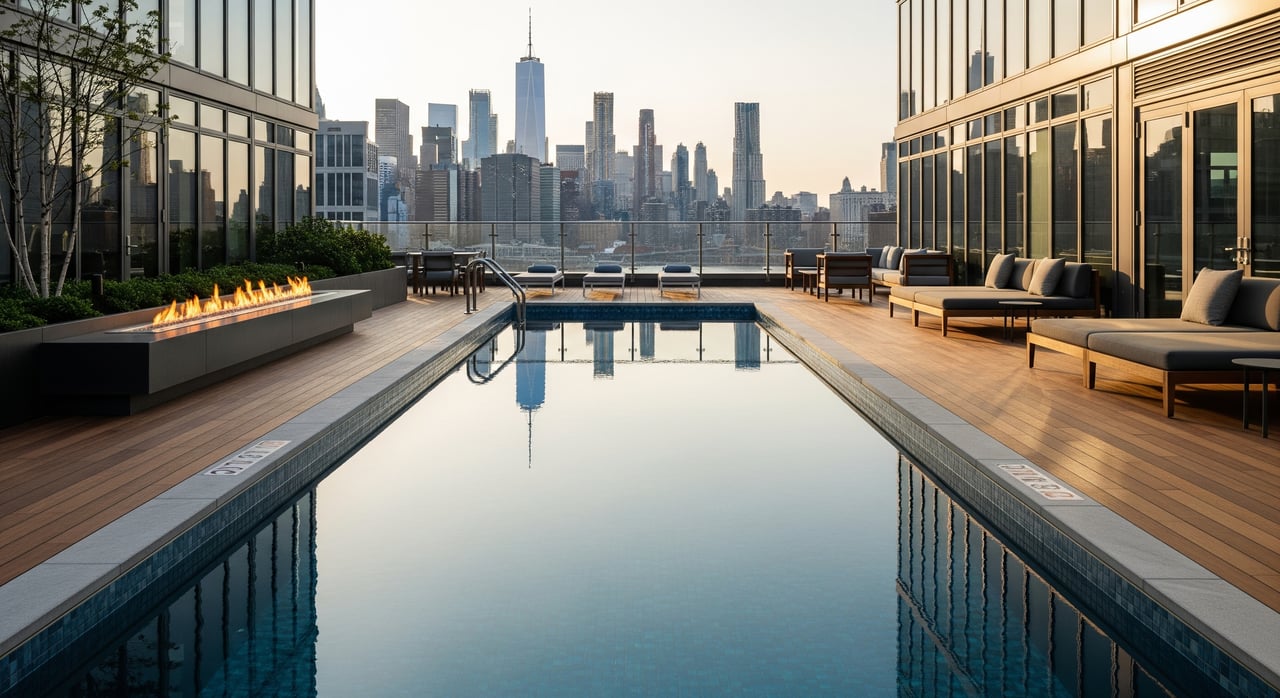
Indoor, outdoor, or rooftop pools show up in higher-end waterfront towers more than in older or mid-market buildings. They are attractive lifestyle features, especially with river views.
Pools are costly to run. Expect expenses for chemical treatment, heating, seasonal covers, and specialized staff. Many buildings set clear rules on access, guests, and seasonal closures, and the presence of a pool can noticeably raise monthly common charges.
Landscaped roof decks and shared terraces are common across LIC buildings. Waterfront views make these spaces popular for relaxing, light remote work, and social time.
Costs include landscaping, furniture, liability coverage, and seasonal maintenance. It is generally less expensive than a pool, but it still matters to the building budget. Many buildings use reservation systems, limit amplified sound, and post quiet hours to manage demand and noise.
Dedicated work lounges, phone booths, and conference rooms have become common in newer LIC condos. Some buildings even partner with third-party co-working brands.
These spaces require HVAC, IT infrastructure, and reliable Wi‑Fi. Buildings often set booking policies and may charge small fees for private rooms or printing. If you work hybrid, look for soundproofing, capacity limits, and clear guest policies.
Playrooms and family lounges appear in many buildings that serve a range of household needs. Larger developments may offer bigger indoor areas or connected outdoor play spaces.
Ongoing costs include cleaning, safety checks, and liability coverage. Programs with staff add labor expense. Typical rules cover supervision, age limits, and reservation windows to keep things orderly.
Street parking in LIC is limited, so buildings may offer garages, valet, or deeded spots. Bike rooms are expected in newer developments, and EV chargers are becoming more common.
Parking revenue can offset some expenses in the building budget. EV chargers require electrical upgrades and may involve usage fees. Check whether parking is deeded, assigned, or waitlisted, and review current monthly rates before you budget.
High package volume makes staffed rooms or automated lockers a practical must-have. Some luxury buildings add cold storage for groceries.
Lockers reduce staffing needs but require maintenance and software support. Refrigerated storage has ongoing electrical costs. Reliable package systems are a quality-of-life upgrade if you commute or work late hours.
Pet wash stations simplify cleanup and reduce wear in common areas, but they add cleaning needs. Screening rooms and media lounges appear in luxury towers and require AV upkeep. Spa, sauna, and steam rooms are premium features with higher maintenance and compliance requirements.
Biggest cost drivers: 24/7 staffing and pools. If you want lower monthly fees, prioritize buildings without those two or choose part-time staffing instead of full-time.
Use these questions to compare buildings and understand your true monthly costs:
Before you commit, ask for and review these materials:
Lenders look at monthly common charges when they review your debt-to-income ratio. Very high common charges relative to the unit value can affect approvals. If a building has high rental percentages or limited reserves, some loan programs may have extra project reviews before you can close.
Ask lenders how special assessments or planned capital improvements could affect underwriting. If you are pursuing conventional programs or VA/FHA, confirm condo eligibility requirements early in your process.
Some LIC buildings sit in FEMA flood zones. Lenders and associations may require flood insurance, and your building may invest in resiliency features like elevated mechanicals, flood barriers, and backup generators. These reduce risk but can increase operating costs and insurance needs.
Confirm whether the association carries adequate flood coverage and whether you must carry separate flood insurance. Ask how resiliency features are maintained and budgeted in the operating plan.
Amenities can boost daily comfort and future resale appeal, but they are not free. If you will rarely use a pool or large gym, you may prefer a mid-market building with a roof deck, small fitness room, and great package handling. If you work hybrid, a reliable co-working lounge and quiet common spaces might deliver more value than a long list of rarely used perks.
Think about what you will use weekly, not just what looks great on a tour. Pair that list with a close read of the building budget, reserves, and any planned projects.
Choosing the right LIC condo is about fit. Match your daily routine to the amenities you’ll use, then verify the budget, reserves, and rules so there are no surprises. If you want help comparing buildings, reviewing documents, or stress-testing monthly costs, connect with JC Luxury Group for tailored guidance.
Are you interested in buying or selling a home? Look no further than working with our real estate experts.