
Home
Meet the Team

Why Partner With Us

Home Search

Home Valuation

Communities

Testimonials
New Developments

Commercial

Video Gallery
Blog

Contact Us

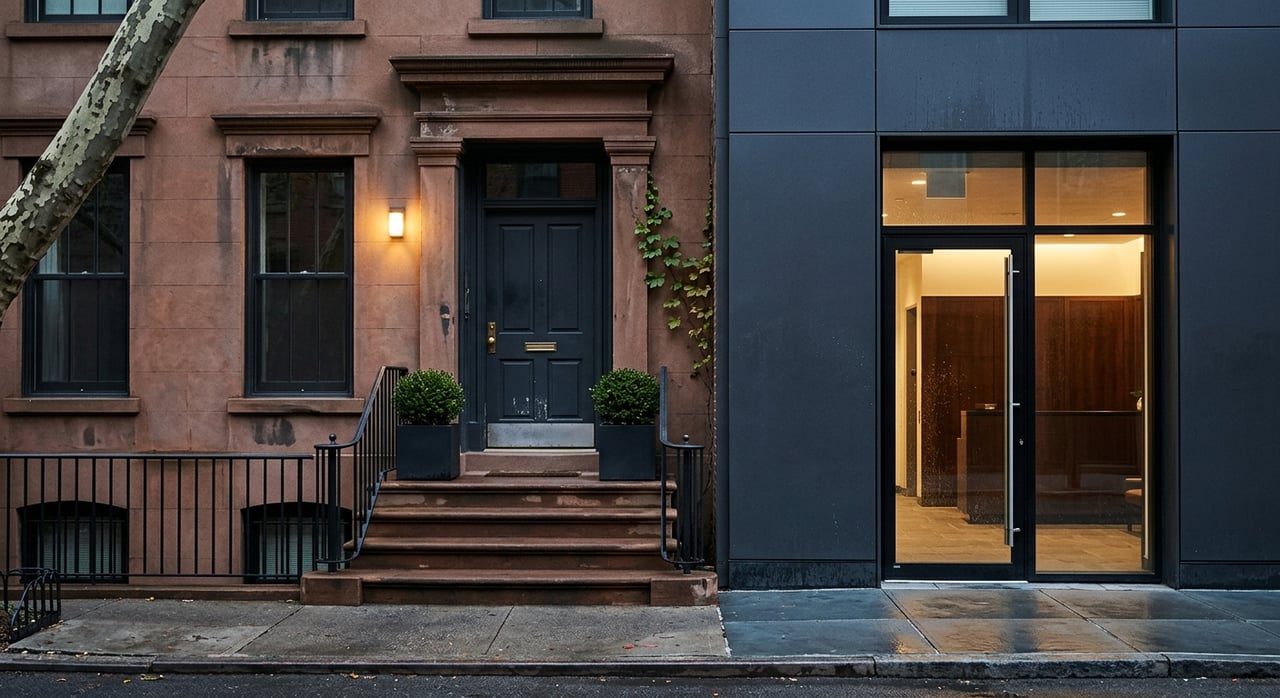
Wondering whether a Brooklyn Heights brownstone or condo is the better fit for your next move? It is a smart question, especially in a neighborhood known for historic charm, premium pricing, and very different ownership experiences depending on the building type you choose. If you are weighing character against convenience, privacy against service, or flexibility against simplicity, this guide will help you compare the tradeoffs clearly. Let’s dive in.
Brooklyn Heights is one of Brooklyn’s most established and recognizable neighborhoods. It is known for low-rise brick and brownstone streetscapes, a smaller collection of apartment buildings, and the Promenade as one of its signature features.
It is also New York City’s first historic district, which matters when you compare brownstone living with condo living. In practical terms, that historic status helps preserve the neighborhood’s look and feel, but it can also shape what owners can change on a property’s exterior.
For many buyers, the appeal of a brownstone starts with the feeling. A classic Brooklyn brownstone offers a house-like layout, more privacy, and architectural details that are hard to replicate in newer construction.
In New York, the word “brownstone” often describes the attached rowhouse form as much as the stone itself. The classic layout usually places the front door above street level at the stoop, with the parlor floor above, bedrooms on upper floors, and kitchen or service space at the garden or basement level.
Brownstones tend to feel layered and distinct. Instead of one open living level, you usually move through clearly separated floors for entertaining, sleeping, and day-to-day living.
For some buyers, that separation is a major plus. You may like having more privacy between rooms and a layout that feels more like a private home than an apartment.
The tradeoff is simple: you will likely use more stairs every day. If you want everything on one level or easy elevator access, a traditional brownstone may feel less convenient.
The biggest draw is character. Brownstones in Brooklyn Heights often offer historic detail, a stronger sense of individuality, and less shared living than a condo building.
You may also prefer the privacy that comes with owning a rowhouse. There is no elevator bank, shared lobby traffic, or long list of common spaces to navigate.
Brownstone ownership usually comes with more direct responsibility. According to New York City Landmarks Preservation Commission guidance, rowhouse owners should expect ongoing care for roofs, gutters and leaders, walls, windows, stoops, railings, and other exterior elements.
That is not just routine housekeeping. Regular maintenance helps prevent moisture intrusion and other building-envelope issues, which can become more expensive if ignored.
In Brooklyn Heights, exterior work is not entirely up to the owner. Because the neighborhood is landmarked, many changes to front and rear facades require review by the Landmarks Preservation Commission.
Some ordinary repairs, like replacing broken window glass or repainting to match the current color, generally do not require a permit. Still, if you are buying a brownstone, you should be ready for approval timelines and design constraints when work involves windows, stoops, masonry, cornices, or rooftop elements.
If a brownstone feels personal and historic, a condo often feels streamlined and service-oriented. In Brooklyn Heights, condos range from prewar conversions to newer waterfront towers, so the experience can vary quite a bit from building to building.
What many condos share is a more turnkey ownership style. You may give up some of the autonomy of a townhouse, but you often gain convenience, services, and amenities that can make daily life easier.
Typical condo floor plans in the neighborhood tend to be more open and efficient than brownstone layouts. Recent examples often highlight open living, dining, and kitchen areas, split-bedroom layouts, large windows, and outdoor space such as balconies or terraces.
You can also find larger family-sized units in Brooklyn Heights condos, especially in newer buildings. That means condo living here is not limited to singles or part-time owners.
At the newer end of the market, buildings like Quay Tower illustrate the type of amenities some buyers seek. Features there include concierge service, elevator access, laundry in building, a live-in superintendent, package room, parking with valet, storage, a gym, a playroom, and roof deck space, with some homes also offering private outdoor space.
Prewar conversions can offer a different version of condo living. The Standish, for example, pairs a preserved historic exterior with modernized interiors and offers features such as a full-time doorman, concierge, rooftop terrace, bike room, storage, package room, and in many homes, private elevator access and in-unit washer/dryers.
A condo can reduce hands-on maintenance, but it does not remove monthly complexity. Under New York law, common profits and expenses are allocated among unit owners, and common charges generally cover shared building operating costs.
Those charges are not your only ownership cost. Property taxes are separate, and common charges can rise when building expenses change, including repairs, fuel costs, added services, or assessments.
When you compare the two, the choice usually comes down to how you want to live day to day. Both can work well in Brooklyn Heights, but they solve different priorities.
A brownstone puts more control and responsibility in your hands. A condo spreads many building-level responsibilities across owners through the board and monthly common charges.
| Factor | Brownstone | Condo |
|---|---|---|
| Overall feel | House-like and private | Turnkey and service-oriented |
| Layout | Vertical, separated floors | More open and efficient |
| Daily access | More stairs | Often elevator access |
| Maintenance | Owner-managed | Shared at building level |
| Exterior changes | Often subject to landmark review | Managed within building structure |
| Amenities | Typically limited to the home itself | May include doorman, concierge, gym, storage, roof deck |
| Monthly costs | More direct upkeep responsibility | Common charges plus property taxes |
| Customization | Often feels more controllable, with landmark limits | Less customizable overall |
A brownstone may be the better fit if you value historic character, privacy, and a true townhouse feel. It can also appeal if you like having distinct living zones rather than one open-plan apartment layout.
You may also lean toward a brownstone if longer-term customization matters to you and you are comfortable managing upkeep. The key is going in with realistic expectations about maintenance, stairs, and landmark-related review.
A condo may be the better choice if convenience leads your decision. Elevator access, doorman or concierge service, amenity spaces, and lower day-to-day maintenance can make condo ownership feel simpler and more predictable.
You may also prefer a condo if you want a more efficient layout, building staff support, and fewer hands-on responsibilities. That can be especially appealing if you travel often, work long hours, or simply want a more lock-and-leave lifestyle.
Before you decide between a brownstone and a condo in Brooklyn Heights, ask yourself a few practical questions:
Clear answers to those questions can quickly narrow the field.
There is no one-size-fits-all winner in Brooklyn Heights. A brownstone can deliver charm, privacy, and a strong sense of ownership, while a condo can offer service, ease, and a more turnkey experience.
The best choice is the one that matches how you actually live. When you line up your priorities around layout, upkeep, convenience, and long-term ownership style, the decision becomes much clearer.
If you are exploring Brooklyn Heights and want tailored guidance on the right fit for your goals, JC Luxury Group can help you compare options with a smart, strategy-first approach.
Are you interested in buying or selling a home? Look no further than working with our real estate experts.